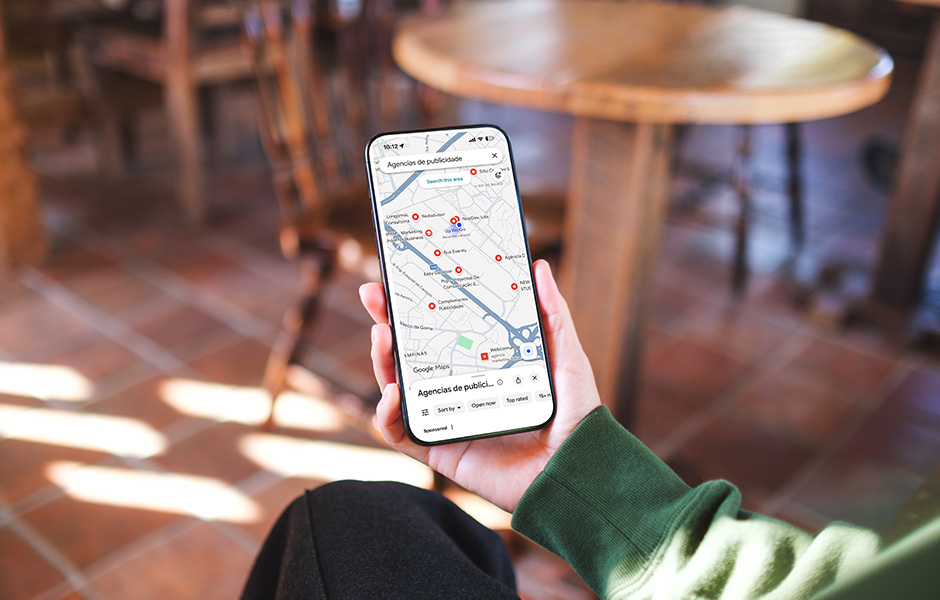
When someone needs a service near them, the first step is rarely to ask for a recommendation. It’s to pick up their phone and search. If your business doesn’t appear at that exact moment, your competition will. This is precisely where Local SEO comes in.
What is Local SEO?
Local SEO is the set of practices that make your business visible in searches with geographic intent, that is, all those that include expressions such as “near me,” the name of a city, or a parish. Unlike traditional SEO, which competes for visibility at a national or global level, Local SEO competes in a much more specific territory: the area where your business operates and where your real customers are located.
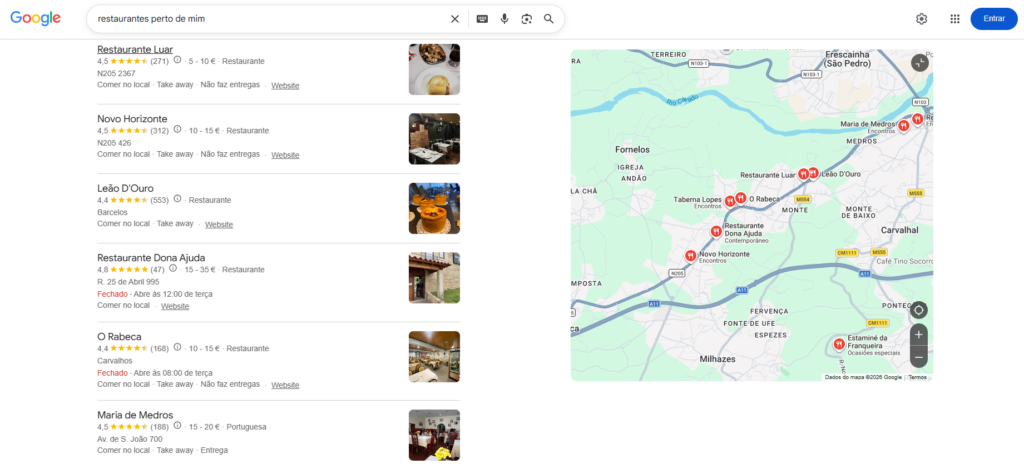
In practice, we’re talking about three fronts working together. Your website, which needs to clearly communicate where you are and what you do. Your Google Business Profile, which feeds the map results and the so-called local pack, that block with three businesses that appears at the top of the page. And finally, all the information about your business scattered across the internet, from directories to review platforms.
The big advantage is the quality of the traffic. Someone looking for a restaurant, a clinic, or an electrician in their area isn’t exploring. They’re ready to decide.
Tips to improve your business’s local SEO.
1. Optimize your website for local searches.
It all starts with your website. If Google doesn’t clearly understand where you operate, it’s unlikely to show it to people searching in that area.
Start by including location information in the most important elements: page titles, meta descriptions, headings, and main text. Instead of a generic page about “financial consulting,” write “financial consulting in Porto.” Also, ensure that your business name, address, and phone number appear consistently, ideally in the footer of every page.
If you have multiple locations, create a dedicated page for each one, with its own content and not just a city name. Add an embedded map, structured data such as LocalBusiness, and ensure the site loads quickly on mobile devices, as the vast majority of these searches happen on the go.
Read also: The success of SEO optimization: Ribeira Flores 59
2. Encourage customer reviews.
Reviews are one of the most influential factors in local positioning and, at the same time, what convinces those about to make a decision. According to Thestacc , reviews are estimated to account for between 15% and 17% of local SEO ranking, and it is known that 68% of consumers only consider businesses with a rating of four stars or higher.
The most common mistake is expecting reviews to appear on their own. Ask for them: create a natural moment at the end of the service, send a direct link via email or message, place a QR code at the counter or on the invoice. The fewer steps, the higher the response rate.
Equally important: respond to all reviews, both positive and negative. A calm and constructive response to criticism conveys more confidence than a series of five-star reviews without any interaction, and Google values active profiles.
3. Create relevant and local content.
Content is what allows your business to appear in dozens of searches beyond just your brand name, and in Local SEO, the most effective content is the content that only your company can write.
Talk about your area. Real customer testimonials from the region, articles that answer specific questions from local residents, guides associated with local events, partnerships with other businesses in the area. A gym in Matosinhos that writes about the best running routes along the waterfront is building geographical relevance in a way that no national chain can replicate.
Also work on long-tail keywords, those longer and more specific phrases that have less volume but much more purchase intent. They are easier to win and convert better.
4. Create and manage profiles in online directories.
Google cross-references information from multiple sources to confirm that your business exists, where it is located, and what it does. Each consistent mention reinforces that trust. Each inconsistency weakens it.
Start with the essentials: a complete and verified Google Business Profile, Apple Business Connect, Bing Places, Facebook, and Instagram. Then add industry directories, booking portals, business associations, and review platforms relevant to your business.
The key word is consistency. The name, address, and phone number must be exactly the same in all aspects, including abbreviations and formatting. An outdated address in an old directory can cost you positions. Conduct an audit at least twice a year and update opening hours whenever there are changes, especially during holiday periods.
5. Develop descriptions of the listed services.
Many businesses fill out their Google Business Profile hastily, choose a category, and leave it at that. It’s a missed opportunity.
List all the services you provide and write a personal description for each one, using natural language and the terms your clients actually use. These descriptions help Google understand the breadth of your offerings and allow you to appear in searches you would otherwise never reach.
The same applies to the overall business description. Data from Localo indicates that the highest-ranked profiles have descriptions of around 70 words, approximately 250 reviews, and a significant number of images. Don’t write empty institutional text: explain what you do, for whom, where, and what distinguishes you.

Statistics that prove the importance of Local SEO.
According to data compiled by BizIQ , the numbers speak for themselves:
- 46% of all Google searches have local intent, meaning that almost half of everything searched on Google corresponds to someone looking for something near them.
- 76% of mobile phone users who perform a local search visit a physical establishment within 24 hours.
- Businesses with complete Google Business Profiles receive 70% more site visits than those with incomplete profiles.
- 98% of consumers read online reviews about local businesses, and the signals from those reviews influence approximately 15% to 17% of placement in the local pack.
- The local package appears at the top of Google’s search results in 93% of searches with local intent.
- Local SEO generates a cost per lead that is 61% lower than traditional outbound marketing for small businesses.
- Searches for “near me” on mobile phones have grown by 900% in two years, and 28% of those searches result in a purchase within a week.
This last statistic is probably the most important for you. While most businesses still lack a defined local strategy, there is real room to gain visibility with a comparatively small investment.
Local SEO doesn’t yield results overnight, but it’s one of the jobs with the best medium-term return for those who depend on clients from a specific area, and, as with any digital asset, the sooner you start, the sooner you start reaping the rewards.
Want to understand where your business is losing visibility in local searches? Talk to us.


