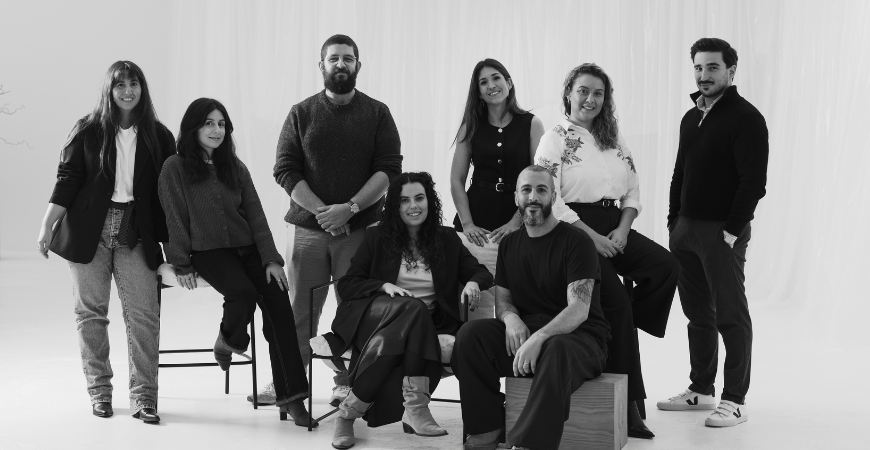
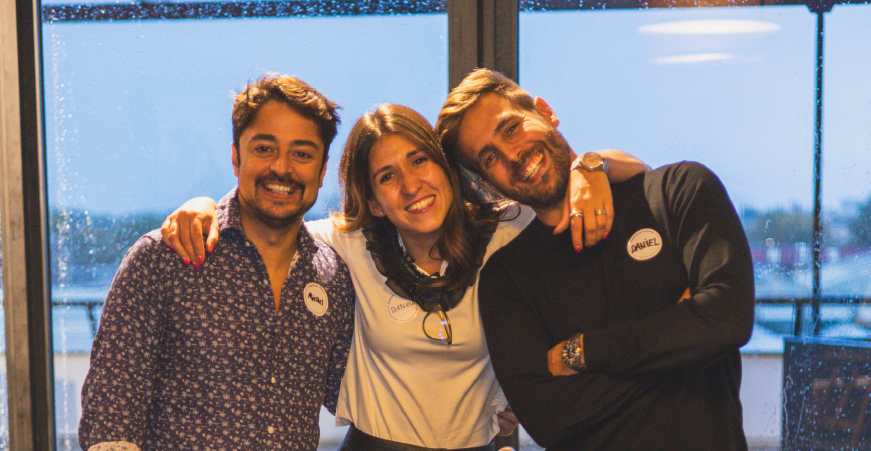
Written collaboratively, across different time zones, by Daniela Silva, Daniel Oliveira, and Michel Dattani, founders of Up We Go, this article reflects on the future of creativity, artificial intelligence, and marketing agencies. This is not just another article about AI, but a manifesto, because we believe that the best digital agencies are not those that follow trends, but those that help define them.
Embrace the changes
When we founded Up We Go in 2015, digital marketing was a very different reality from today – we barely considered Instagram as a business tool, TikTok didn’t even exist, and Artificial Intelligence was far from being part of everyday conversations. The market was more predictable, there were fewer platforms, fewer tools, and a much smaller number of possibilities to reach consumers.
Even then, we realized that the real challenge was never the tools themselves . It was how they were used. A new feature, a new trend, or a new platform would emerge, and a few weeks later, it seemed like everyone was doing exactly the same thing . The goal was to follow the current trend, without deep reflection on whether that approach actually made sense for each brand.
From day one we believed (at the time only one of us believed it, we confess) that tools are just that: tools. Their value always depends on the strategy behind them. Therefore, instead of simply replicating what the market was doing, we preferred to experiment.
We tested new platforms, analyzed methodologies, explored software that few companies were using at the time, and sought to understand how each innovation could solve real problems for our clients.
We adopted some tools too early and others we decided never to use, but this constant curiosity allowed us to develop a very unique way of working: question first, test later, and only implement when there was clear value for the client.
Looking back, we realize that this mindset ended up being one of Up We Go’s greatest advantages. While the market debated which social network would be the next big thing, we were focused on understanding people’s behavior, measuring results, and building strategies capable of surviving the inevitable changes in technology.

More Intelligence, Less Artificiality
More than a decade later, Artificial Intelligence is at the center of the conversation. Every day new tools, new models, and new promises emerge about how marketing will change. It’s impossible to remain indifferent to the impact of this evolution. However, for us, the question remains exactly the same as the one we posed in 2015: how can this technology create more value for our clients?
That is precisely why we believe that companies don’t simply need to adopt Artificial Intelligence. They need to know when to use it, how to integrate it into their processes and, above all, when it makes sense not to use it. Because no technology, however advanced, replaces the ability to understand a business, set priorities and make strategic decisions.
The tools have changed. The algorithms have changed. Consumers have changed. And we have changed too. But there is one thing that has never changed: the conviction that the true differentiating factor lies not in the technology we use, but in how we think before we use it.
If there’s one certainty that Artificial Intelligence has brought us , it’s this: the true differentiating factor is no longer access to technology, but the ability to use it intelligently. Just to emphasize: intelligently.
From our perspective, the real value is no longer in asking Artificial Intelligence for an answer. It lies in knowing how to question it, interpret what it returns, separate what makes sense from what should be discarded, and adapt each recommendation to the reality of a company. Which leads us to the next topic: people.
AI in marketing is not here to replace people.
Today, virtually anyone can generate text, create an image, summarize a report, or produce dozens of ideas in just a few minutes. Tools that seemed inaccessible a few years ago are now available to any company, regardless of its size. This democratization is undoubtedly one of the greatest revolutions marketing has ever experienced.
However, the ease with which content is produced today has also brought a new challenge. When everyone has access to the same tools, the competitive advantage is no longer in the tool itself. It becomes about how we think (intelligently), the decisions we make, and the ability to transform information into strategy.
“In recent months, it has become increasingly common for clients to arrive at meetings with comprehensive reports generated by tools such as Chat GPT, Claude, or Gemini. These are well-structured documents, convincingly written, and often dozens of pages long, containing analyses, recommendations, and action plans. The problem is that a well-written report is not necessarily a good report. ”
Many of these documents are based on assumptions that have never been validated, use incomplete data, or make recommendations that are too generic for the reality of a specific business. However, because the information is presented with confidence and organization, it is natural for many entrepreneurs to assume that they have a ready-to-implement strategy in their hands.
“The strategy remains profoundly human. Artificial Intelligence can answer many questions, but it still needs someone to ask the right questions.”Daniel Oliveira
AI still doesn’t understand a business context in the same way a team that has been working with a client for years does. It doesn’t know the company culture, it doesn’t participate in the meetings where the best ideas emerge, and it can’t replace the experience gained after hundreds of completed projects.
We therefore believe that one of the greatest risks companies currently face is using Artificial Intelligence as a substitute for human thought, when its true potential lies precisely in the opposite.
At Up We Go, we don’t rely on AI to make decisions for us. We use it to challenge our own ideas, explore new possibilities, and free up time for what no technology can do: think strategically, create connections between concepts, understand people, and make decisions based on experience.
What will never change
We are often asked a question: “Will Artificial Intelligence replace agencies?” Our answer is always the same: no. However, it will replace the agencies that continue to work in exactly the same way they did ten years ago.
Let’s think about our lives: we receive clinical analyses and immediately ask Chat GPT to “translate” what all those terms mean, but at no point do we stop going to the doctor. That’s what’s missing: the professional, with training and experience in the field, who will interpret, based on that specific context, what the results of the analyses mean and what actions should be taken.
The future doesn’t belong to those who use the most tools. It belongs to those who can combine knowledge, creativity, technology, and strategic thinking.
Since 2015, one thing has never changed : the desire to learn before others, to test before others, and to evolve before others. The tools will continue to change, but this way of thinking will continue to define who we are and our path. And that path is UP!