In 2021 Google announced the end of third-party cookies by 2023 and panic set in among agencies and marketing departments. Now there is a new postponement, with information indicating that the process will begin in 2024. Concerns postponed or put on hold? That’s what today’s post is about.
Why the End of Cookies?
Generally speaking, when you visit a website it can insert into your browser cookies. Cookies are files that store information such as your IP address, search history and therefore your preferences in order to identify and impact you, whether on other websites or on social networks.
Cookies then allow us to get to know the visitor’s interests and, thanks to this, deliver better content to them, in the right places and according to their stage in the sales funnel. This is perfect for marketers, but perhaps not very transparent for users.
Admit it, how many times have you stopped entering a website because you knew it would be tracked in the future? Probably never, but we bet you always click on “I accept” for the best browsing experience.
“Privacy is the horizon.”
(source: Raunilson de Carvalho Bezerra)
When third-party cookies end, companies will only have first-party data, i.e. the data they have received directly from their consumers.
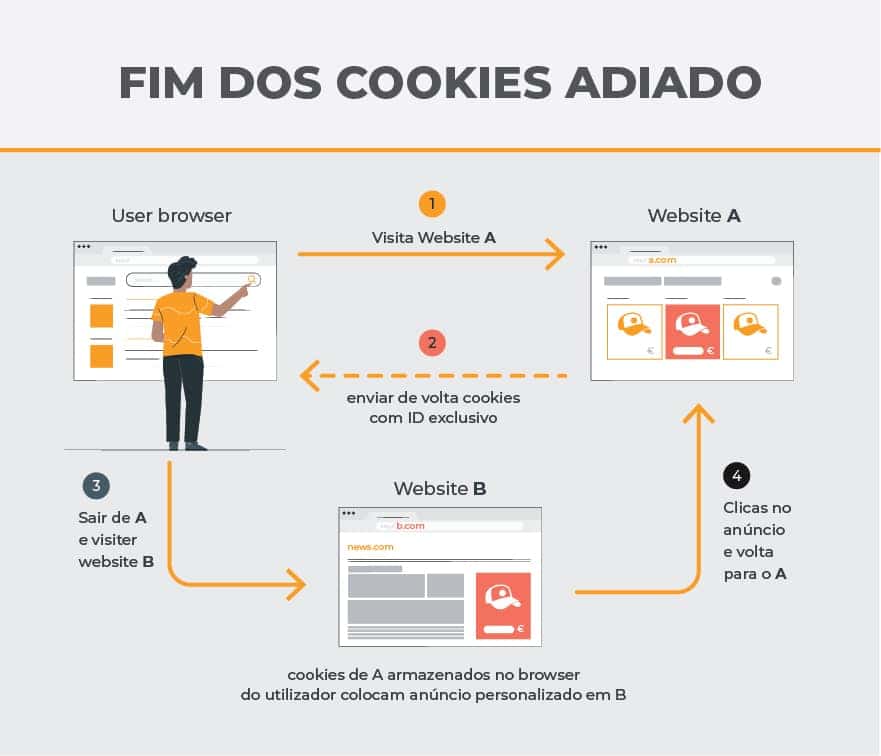
End of Cookies Postponed Again
It has been officially confirmed that Google will postpone the end of third-party cookies in the Chrome browser, mainly to ensure that marketing teams have time to adjust their approach and develop and test new, less intrusive technologies.
In true Portuguese fashion, you’ll be thinking “I have time to worry about that”. Although the replacement and the next steps are still uncertain, don’t let yourself get complacent. Instead, think that you’ve bought yourself time to prepare.
What to do to prepare for the future?
O fIRST ADVICE is to bet on content – original, entertaining, educational and that keeps people coming back to your website. In fact, in August of this year, Google announced on its blog that it had changed its search algorithm, giving even more relevance to good content – up to we wrote an article about this change.
A second tip is to invest in creating your own database. Encourage visitors to your website and social networks to provide their data, in accordance with your privacy policy. It’s very important to nurture this database and not drive them away, for example, with irrelevant information. If you want to read more about this topic, check out the topic of marketing automation.
Em third place, test the various browsers to find out where the loss of cookies will have the greatest impact and thus mitigate its repercussions when they are deleted.
The fourth and final recommendation is to contact a digital marketing team that can help you, like ours. If you schedule a meeting with us, I promise cookies, but edible ones! 🍪😉