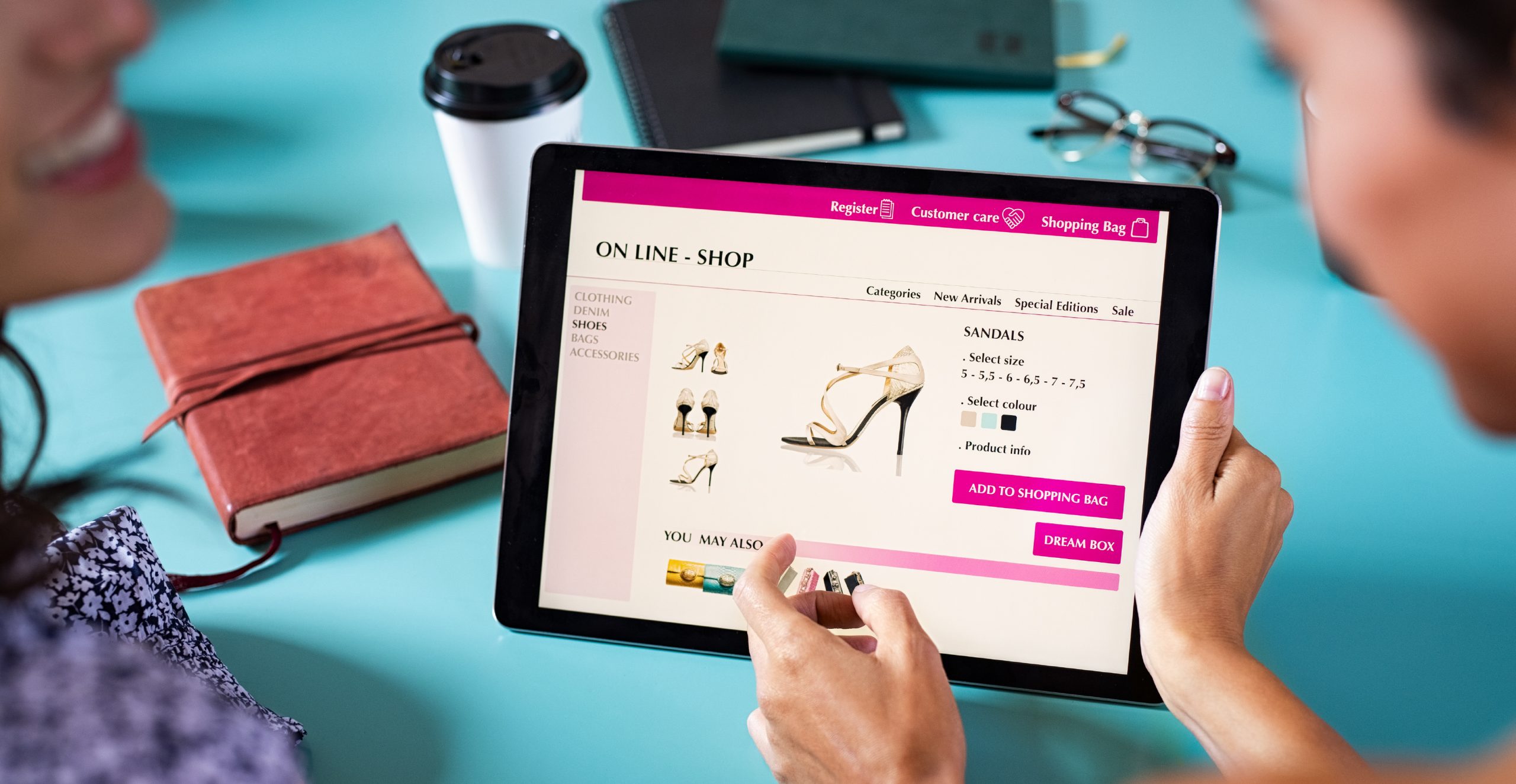
E-commerce is currently one of the fastest growing sectors. One of the key strategies for success in this industry is to make the whole process credible for potential customers. This means giving consumers the closest possible idea of what your products offer through the screen, and this is where the product description proves fundamental.
Did you know that about 22% of consumers return their orders because the actual product is different from what was described on the website? You can protect your business against the added costs of returns by developing honest, detailed and accurate product descriptions.
More than a simple text, a good product description is the tool that helps consumers make confident purchasing decisions. It clarifies technical and practical details, allowing the buyer to assess whether the item meets their needs or satisfies their desires.
Tabela de Conteúdos
At the end of the day, the effectiveness of a description lies not only in the quality of the writing, but in its ability to answer the customer’s internal questions and remove any barriers to purchase.

What is a good product description and how do you create one?
Simply put, product descriptions highlight the main features and technical specifications of the item directly on the sales page of your website.
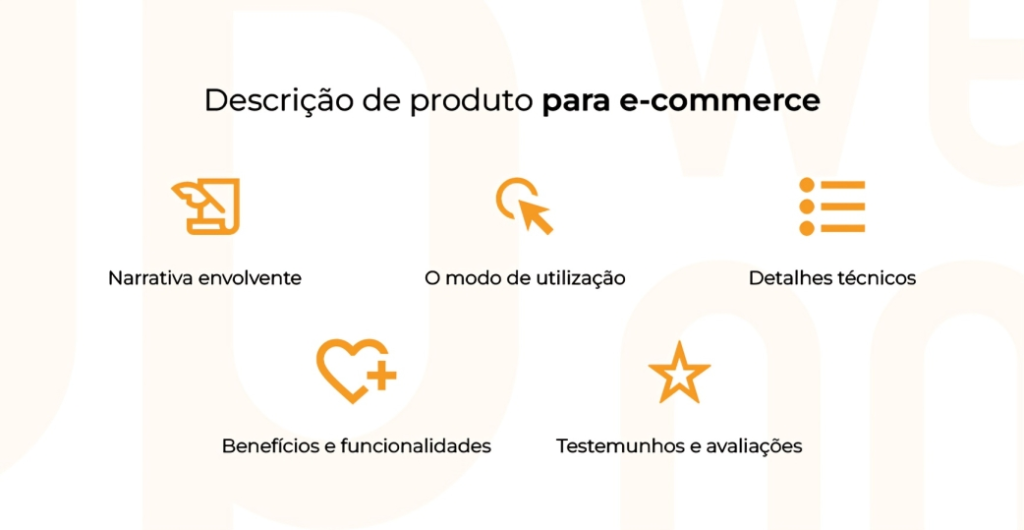
To ensure a good product description, it is essential to include: clear benefits and features; how to use it; technical details; an engaging narrative that humanizes the brand and, finally, testimonials and reviews from other users.
In a digital market where consumers are increasingly demanding, the first impression is often the only opportunity for conversion. While persuasive and unique writing makes your catalog stand out from the competition, a vague product description turns off potential customers, pushing them towards competing websites that offer the detailed information they are looking for. If you can’t captivate your audience with your words, the real value of your product will remain invisible.
The importance of a good product description for e-commerce success
Product descriptions are vital to the success of any digital marketing strategy. They not only allow you to detail the specifics of the item, but also to establish a closer relationship with the consumer.
Education and trust
In the world of e-commerce, consumer education is a fundamental pillar. Product descriptions act as practical guides, clarifying any doubts before the purchase. A good product description provides the crucial details that give the consumer confidence.
By ensuring that each product has a clear, thorough and informative text, you are enabling the buyer to make an informed and safe purchasing decision. This process is vital to building a relationship of trust. When the customer finds accurate descriptions combined with good images, they feel they are making the ideal choice.
It is therefore essential that these texts are honest and transparent. You must avoid misleading information that could damage the brand’s reputation. Clarity is often the factor that differentiates a sale from a rejection.
With persuasive and trustworthy language, you will be able to guide the consumer to the shopping cart in a natural way. In this way, you reinforce your store’s credibility and turn occasional visitors into loyal customers.
Professionalism and differentiation
The credibility of an online store depends on its professionalism. Having a good, thoughtful and creative product description shows that you have mastered your business. The customer expects to find a carefully crafted website, with quality images and error-free texts.
Impeccable texts validate your brand’s competence and generate trust. What’s more, descriptions are the ideal tool for standing out in a saturated market. They show that your company cares about detail and the customer.
Avoid copying generic specifications from manufacturers or ERP systems. Invest in personalized and exclusive content for your audience. By focusing on people’s real needs, you will differentiate yourself from the competition. A good product description convinces the visitor that your offer is the best choice.

Emotional connection
If you want to sell more, the key is to improve your product descriptions. They are often the final push the customer needs to buy.
The trick is to arouse emotions. People don’t just buy objects, they buy solutions and sensations. With a well-told story, you can overcome the rational side and help visitors make up their minds more quickly.
Use words that convey quality. If you add photos of real people using the products, you can humanize your brand. This closeness, with authentic writing, turns curious people into buyers. A good description gives customers the confidence they need to click the buy button without hesitation.
Optimization for Google Ads and Perfomance Max
In the Google ecosystem, a good product description is a fundamental pillar for visibility. Since ads rely heavily on keywords, a well-structured description is what allows your products to appear at the top of the results.
This is even more critical in Performance Max campaigns, where the quality of the information in the product feed dictates whether or not the ad will be shown for a specific search. If the aim is to maximize the return on these campaigns, optimizing product descriptions must be an absolute priority.
Conversion in Meta Ads
Whether in image, video or carousel formats, good Meta practices demand precise descriptions. The use of strategic keywords and the clear highlighting of offers are essential to capture the user’s attention as they browse your feed.
A good product description helps:
- Retaining attention: standing out in an environment of constant visual stimulation;
- Communicate the offer: make discounts and promotions immediately understandable;
- Increase CTR (click-through rate): using terms that your target audience is already searching for significantly improves the performance of your ads.
Increasing online sales and selling more should not be limited to creating an online store without a strategy. In an increasingly competitive and constantly evolving market, it is essential to go beyond digital presence and invest in effective strategies that attract visitors and convert them into loyal customers.
Find out more >>> Want to boost your online sales? Here’s how
10 Tips to improve your product descriptions
Creating a good product description is much more than listing its features. It’s an opportunity to show the real value of what you sell.
Learn how you can build a description that really converts and boosts your sales.
Tip 1: Understand your target audience
To write engaging descriptions, you need to know your customers’ intentions and difficulties. Analyzing their profile and consumption habits allows you to personalize your message. This ensures that each text meets the needs of your audience.
By adapting the language to your “persona”, you anticipate doubts and eliminate hesitations. A good product description uses the customer’s own vocabulary, making it much more persuasive and effective for the sale.

Tip 2: Prioritize benefits over features
In e-commerce, benefits sell more than technical data because they connect with emotions. Instead of just listing what the product is, show what it does for the user. Focus on how it solves problems and saves time or effort.
A good product description should translate technical specifications into real value. For example, instead of “90Wh battery”, prefer “12 hours of autonomy for uninterrupted work”. The customer values the resultnot just the number.
Always focus on the end benefit for the consumer. Instead of “powerful suction”, use “spotless floors and a clean home with less effort”. This approach brings your brand much closer to the needs of the buyer.
Highlight what’s important with bold or lists. This way, the advantages are read at a glance. A good product description sells ultimate satisfaction and is the fastest way to the shopping cart.
Tip 3: Use sensory language and strong adjectives
Sensory language allows customers to imagine what it’s like to use the product. Describing sensations, smells, or textures makes your offering memorable.
Awaken the senses and avoid generic descriptions. Instead of “cashmere sweater”, use “wrap yourself in the luxurious softness of cashmere”;
Use strong adjectives and real comparisons. Instead of “our shampoo has natural ingredients”, use “our shampoo will leave your hair soft and smelling amazing”. Use analogies such as “a trunk with more space than a shopping cart” to help the consumer visualize the space;
By adopting this approach, you ensure a compelling product description that immediately grabs the customer’s attention and makes the decision to buy much more instinctive.
Tip 4: Tell a story
The brain retains information better through stories. Use the text to explain the product’s origins or how it fits into the customer’s life. By creating these scenarios, the product becomes part of the consumer’s personal story.
If you’re selling handmade jewelry, share details about the artisan and the techniques used. This approach humanizes the brand and helps customers envision special moments, making your offering more memorable.
Storytelling strengthens the emotional connection with the audience and sets a cold sales pitch apart from a memorable experience. A good product description should, therefore, be inspiring, not just informative.
Tip 5: Optimize for search engines (SEO)
Descriptions should be tailored to both customers and search engines. Effective optimization ensures that your articles appear when consumers search for related terms, driving more organic traffic.
Identify the keywords your customers use and incorporate them naturally into your titles and meta tags. Avoid overusing keywords, as this makes the text difficult to read. A good product description should always be smooth and easy to read.
Organize your content using headings (H1, H2) to help Google understand it. Also, make sure the page’s URL is simple, descriptive, and includes the main keyword.
By organizing your catalog this way, you improve brand visibility and the user experience.
Tip 6: Use lists and short paragraphs
The structure of the text is crucial for capturing the customer’s attention. Make it easy to read quickly by organizing the content in a straightforward way. A good product description should be clear and easy to grasp at a glance.
Break the information down into short paragraphs. Use lists to highlight technical details, such as dimensions or materials. These visual breaks draw the eye to the most important points.
Use simple language and avoid complex sentences. Be concise and choose vocabulary that your audience can understand effortlessly. When the content is straightforward, consumers grasp the message more quickly.
A well-structured text conveys professionalism and trust. Organizing your catalog in this way improves the website experience and helps shoppers make quick decisions.
Tip 7: Include high-quality images
Although the text is fundamental, it is the images that often close the sale. Visual content must be impeccable in order to convey trust. A good product description gains even more strength when accompanied by high-resolution photographs.
Include several images that show different angles and details. Using zoom or 360-degree rotations helps create a sense of realism. Also show the product "in action" so the customer can visualize its scale and practical application.
Use descriptive filandmes and alt text with keywords to improve SEO. If necessary, adjust the proportions of the photos without losing quality, using editing tools.
Quality images, combined with structured text, reduce consumer doubts. This combination is essential for conveying professionalism and ensuring that the visitor feels safe to complete the purchase.
Tip 8: Integrate Reviews and Testimonials
Testimonials are one of the most powerful sales triggers. Knowing that other customers have been satisfied reduces uncertainty and increases the store’s credibility. A good product description should always be accompanied by real reviews.
Include user-generated content (UGC), such as photos or videos of the item in use. Place these testimonials visibly, preferably near the buy button. This strategic highlight validates the quality of what you are selling.
Don’t forget to mention awards, certifications or references in the press. This official recognition gives consumers the security they need to proceed with payment. Third-party validation is the final step to eliminate any doubts.
By integrating these elements, you reinforce trust in your brand. Customers feel more comfortable knowing that their choice is supported by the positive experience of others.
For markets such as hotels and local accommodation, online reviews play a decisive role. Knowing how to use these reviews to your advantage is essential for attracting new guests and increasing confidence in your property.
Read also >>> Turning Online Reviews into Bookings

Tip 9: Adapt descriptions for mobile devices
With the increase in purchases via smartphone, your descriptions must be easy to read on small screens. The content must be fluid and adaptable to any device. A good product description loses effectiveness if the design is not responsive.
Bet on blank spaces to avoid the user feeling overwhelmed by too much information. Put the key details and the purchase button at the top of the page. This prevents the customer from having to scroll too far to decide.
Well-structured text for mobile devices improves the browsing experience and conversion. By making it easy to read on the go, it ensures that the purchasing process is quick and intuitive for all users.
Tip 10: Keep it short and to the point
The ideal length of a description depends on the complexity of the article, but it should be between 150 and 400 words. The aim is to inform and persuade without boring the reader.
For simple articles, such as clothing, 150 to 250 words are enough. A good product description in these cases should focus on the unique selling points and use lists to make it easier to read quickly.
Technological items or household appliances can require up to 400 words. In these cases, detail the operation and specifications well. Use subheadings to organize the information and make it easier for the user to navigate.
Writing concisely shows respect for the customer’s time and professionalism. By maintaining a balance between detail and brevity, you ensure that the main message is assimilated and that the purchasing decision is accelerated.
Product descriptions are vital to the success of any e-commerce site: they capture attention and establish trust. In a competitive global market, the quality of this content is the factor that attracts and retains customers. A good product description acts as a virtual salesperson, guiding the consumer to the final decision.
Neglecting this stage means losing sales. Creating product descriptions that convert requires strategy, time and creativity. If you want to raise the level of your online store and optimize your communication, our agency is ready to help.Ready to give your e-commerce an upgrade? Talk to us